
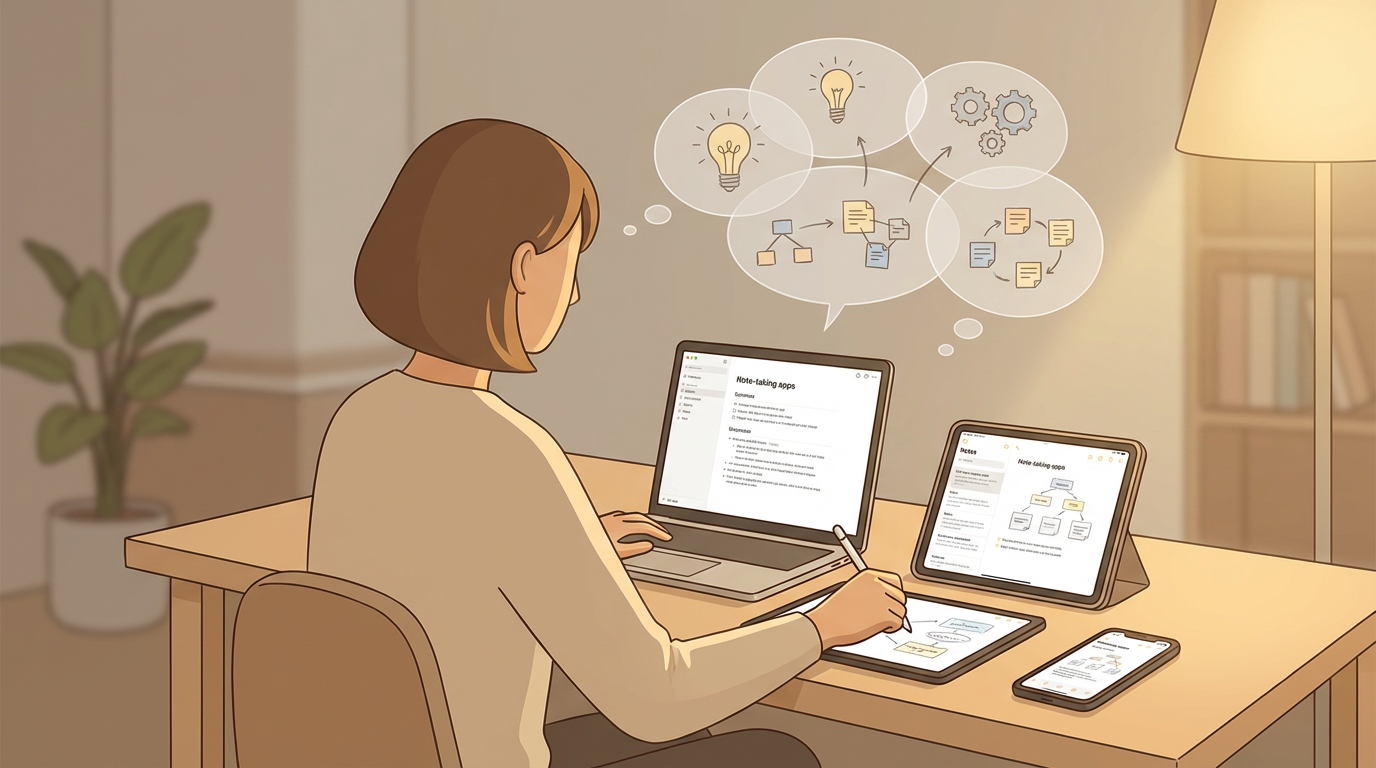
Second Brain Myth: Choose Note-Taking Tools You'll Actually Use
The 'Second Brain' Myth: How to Choose Note-Tools You Actually Use
Picture this: You're three months into your note-taking system, surrounded by abandoned Notion pages, half-filled Obsidian vaults, and that expensive notebook gathering dust. Sound familiar? You're not alone in the great "second brain" migration—bouncing between productivity apps like a digital nomad searching for the perfect home base.
Here's the uncomfortable truth: The problem isn't your tools. It's the myth that the perfect app will magically transform you into a knowledge-capturing machine.
What if instead of chasing the next shiny productivity solution, you built a note-taking system that actually sticks? Let's dig into how to choose tools you'll genuinely use—not just admire from afar.
The Second Brain Seduction: Why We Fall for Tool Promises
The "second brain" concept, popularized by Tiago Forte, promises to amplify our thinking through organized digital knowledge capture. But somewhere between the inspiring case studies and sleek demo videos, we've turned it into a tool-shopping addiction.
Every productivity YouTuber showcases their elaborate setup. Every new app promises to be the "one." We download, configure, import our old notes, feel productive for exactly 2.5 weeks, then repeat the cycle.
Why does this happen? We're solving the wrong problem.
We focus on features instead of friction
We optimize for capturing everything rather than retrieving anything
We mistake complexity for sophistication
We ignore our actual thinking patterns and work habits
The result? Digital hoarding disguised as productivity.
The Mindful Tool Selection Framework
Before you even look at another app, step back and audit your actual note-taking behavior. Not your ideal behavior—your real, messy, human patterns.
1. Map Your Natural Capture Moments
When do you naturally want to jot things down? Track this for a week:
During meetings while multitasking?
Reading articles on your phone during commutes?
Deep-thinking sessions at your desk?
Quick voice memos while walking?
Your note-taking tool needs to meet you where you already are, not force you into new habits.
2. Identify Your Retrieval Reality
Here's a brutal question: When was the last time you actually searched through old notes to find something useful? If you can't remember, elaborate tagging systems and complex linking features might be overkill.
Ask yourself:
Do you reference notes while writing/working?
Do you review notes to spot patterns over time?
Do you share notes with others regularly?
Do you mostly just need to dump thoughts and move on?
3. Assess Your Technical Comfort Zone
Be honest about your tech tolerance. There's no shame in preferring simple tools. A basic app you use daily beats a sophisticated system you abandon monthly.
The Evergreen Buyer's Checklist
When evaluating any note-taking app, run it through these filters:
Friction Test
Can you capture a note in under 10 seconds? Count the taps/clicks from pocket to saved note.
Does it work offline? Spotty WiFi shouldn't kill your flow.
Is search actually useful? Test with real content, not demo notes.
Sustainability Check
Will this work in 5 years? Consider the company's track record and export options.
Can you migrate your data? Vendor lock-in is productivity prison.
Does it integrate with your existing workflow? Island apps create extra work.
Reality Alignment
Does it match your actual device usage? Don't choose a desktop-heavy tool if you live on mobile.
Can other people collaborate if needed? Consider your sharing requirements.
Is the learning curve worth it? Complex tools need compelling long-term benefits.
Tool Categories for Different Thinking Styles
Instead of recommending specific apps (which become outdated), let's match tool types to thinking patterns:
Linear Thinkers
You process information sequentially and prefer clear structure.
Best fit: Document-based apps with folders/hierarchy
Examples: Traditional note apps, cloud documents
Why it works: Mirrors your mental organization
Web Thinkers
You see connections everywhere and think in networks.
Best fit: Graph-based or heavily linked systems
Examples: Networked thought tools, wiki-style apps
Why it works: Supports your natural association patterns
Visual Processors
You think in images, diagrams, and spatial relationships.
Best fit: Canvas-based or multimedia-rich tools
Examples: Whiteboard apps, visual note-taking tools
Why it works: Honors your visual thinking style
Minimalist Capturers
You want quick brain dumps without elaborate organization.
Best fit: Simple, fast capture tools
Examples: Plain text apps, voice-to-text tools
Why it works: Removes barriers to getting thoughts out
Building Your Sustainable System
Once you've chosen a tool that fits your reality, resist the urge to over-engineer. Start with these principles:
Start Stupidly Simple
Use basic features for at least a month before exploring advanced options. Master the fundamentals first.
Design for Lazy Future You
Your system needs to work when you're tired, stressed, or distracted. If it requires your peak mental state, it will fail.
Optimize for Consistency, Not Perfection
A messy note you actually take beats a perfectly formatted note you never write.
Red Flags: When to Abandon Ship
Sometimes the honest answer is to quit. Watch for these warning signs:
You spend more time organizing notes than creating them
You avoid taking notes because the tool feels overwhelming
You can't find notes you know you've written
You're constantly tweaking the system instead of using it
You feel guilty about your "messy" notes
Remember: The best note-taking system is the one you actually use consistently, not the one that impresses other productivity enthusiasts.
Your Next Steps
Choose your personal development approach: Are you ready to escape the tool-hopping cycle and build something that actually sticks?
Start with a one-week observation period. Track when and how you naturally capture thoughts. Then—and only then—choose a tool that supports those existing patterns rather than fighting them.
Your future self will thank you for choosing sustainability over sophistication. Because the goal isn't to build a beautiful second brain—it's to build a working one.
Ready to finally stick with a note-taking system? The secret isn't finding the perfect tool—it's finding the perfect fit for your actual life and thinking style.


