
How I Traded FOMO for 3 Extra Hours of Flow Daily
How I Traded FOMO for 3 Extra Hours of Flow Using Self-Governance Sprints
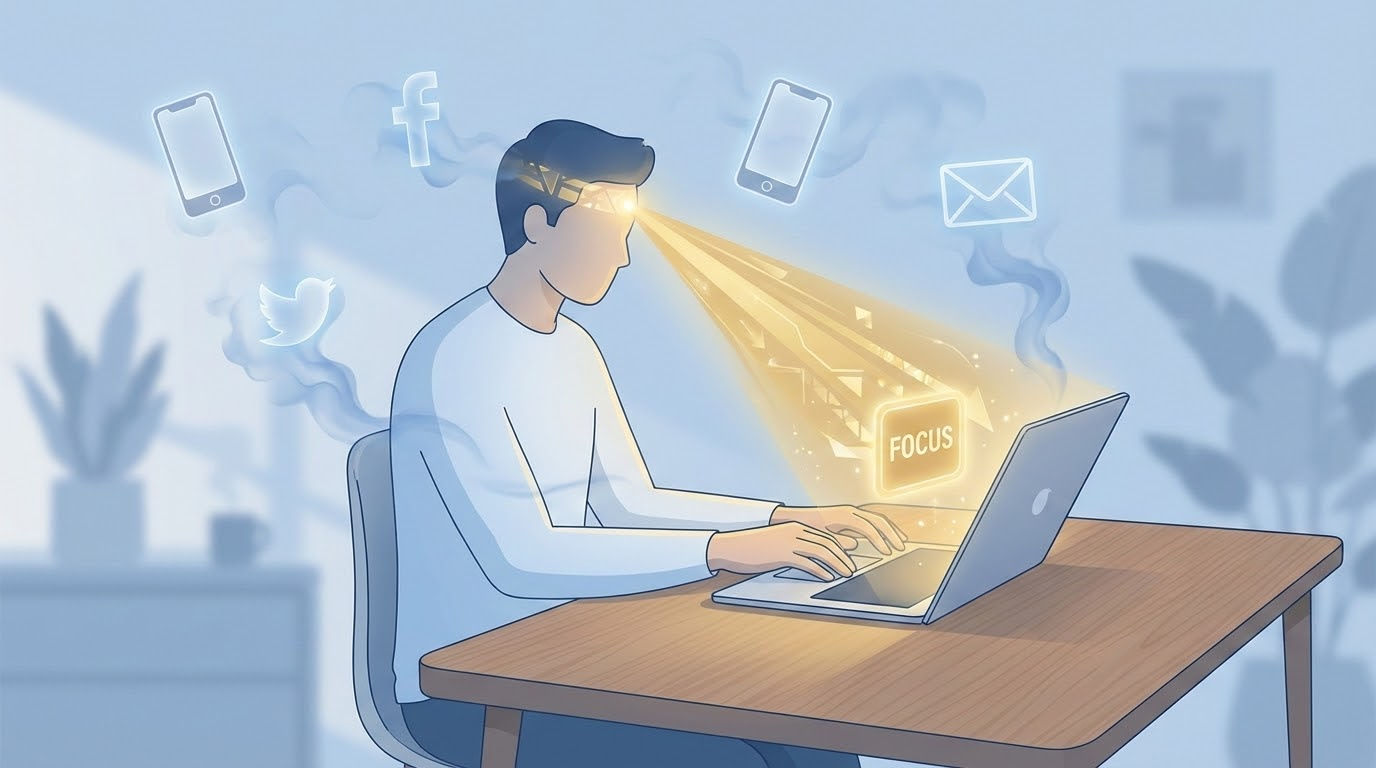
Picture this: You're deep in a creative project when—ping!—your phone lights up with yet another "urgent" Slack notification. Then comes the Instagram story notification, followed by that podcast episode everyone's talking about. Sound familiar?
I used to be a FOMO addict. Fear of missing out had me scattered across seventeen different information streams, constantly context-switching, and wondering why my most important work felt like swimming through molasses. Until I discovered something game-changing: self-governance sprints.
Four weeks ago, I started an experiment that completely rewrote my relationship with distraction. The result? I now enjoy three uninterrupted hours of flow state every afternoon—time I previously lost to digital rabbit holes and reactive firefighting.
Here's the candid breakdown of how I did it, what worked, what didn't, and the exact system you can implement starting today.
The Wake-Up Call: Measuring My Attention Deficit
Before diving into solutions, I needed brutal honesty about the problem. Using a simple time-tracking app for one week, I discovered something horrifying: I was averaging 37 minutes of continuous focus before getting pulled into something "urgent."
The math was devastating:
- 8 hours of "work" = 13 different focus sessions
- Each context switch cost me 5-10 minutes of cognitive reload time
- Total productive deep work: roughly 2.5 hours per day
That's when I realized FOMO wasn't just stealing my time—it was fragmenting my ability to think deeply altogether.
What Are Self-Governance Sprints?
Think of self-governance sprints as personal operating system updates. Just like your phone periodically upgrades its core functions, these are deliberate, time-boxed periods where you rewrite your internal rules and habits.
Unlike traditional habit-forming approaches that focus on adding new behaviors, self-governance sprints emphasize subtracting harmful patterns and replacing them with intentional systems.
My four-week sprint had three core components:
- Audit Phase (Week 1): Ruthlessly tracking where attention goes
- Design Phase (Week 2): Creating new operating rules
- Implementation Phase (Weeks 3-4): Testing and refining the system
Week 1: The Brutal Attention Audit
Before changing anything, I needed data. Every time I switched tasks or got distracted, I logged it in a simple note-taking app. The categories were painfully revealing:
- Social media check: 23 times daily (average 4 minutes each)
- "Quick" email glances: 31 times daily
- News/article reading: 12 instances
- Slack/messaging: 45+ notifications responded to immediately
The revelation? Most of my "urgencies" were actually other people's priorities masquerading as my own emergencies.
Week 2: Designing My New Operating System
Armed with data, I created what I call my Attention Constitution—a set of non-negotiable rules governing how I interact with information and interruptions.
Rule #1: Sacred Time Blocks
I designated 1:00 PM to 4:00 PM as my Deep Work Sanctuary. During these hours:
- Phone goes into airplane mode
- All notifications disabled
- Email closed completely
- One single project gets my full attention
Rule #2: Information Batching
Instead of constant information grazing, I created three designated "feed times":
- Morning briefing (15 minutes, 8:00 AM)
- Midday check-in (10 minutes, 12:00 PM)
- Evening wind-down (20 minutes, 6:00 PM)
Rule #3: The 24-Hour FOMO Filter
Any "urgent" content, article, or opportunity had to wait 24 hours before I could engage. This simple delay eliminated 80% of my reactive consumption.
Weeks 3-4: Implementation and Real-World Testing
The first few days were rough. My brain kept reaching for digital dopamine hits like a phantom limb. But by day five, something magical happened: I discovered what three continuous hours of focus actually felt like.
The results were immediate and measurable:
- Completed my most complex project in 2 days instead of 2 weeks
- Experienced genuine flow states for the first time in months
- Paradoxically felt more connected to important information by consuming it intentionally
What Surprised Me Most
The biggest shock? I wasn't actually missing anything important. That "breaking news" I used to obsess over? Still available (and better analyzed) when I checked it during my scheduled times.
The urgent Slack messages? 90% resolved themselves without my intervention. The remaining 10% were genuinely urgent and got my focused attention during designated communication windows.
Your Self-Governance Sprint Starter Kit
Ready to run your own experiment? Here's your week-by-week blueprint:
Week 1: Track Everything
- Download a time-tracking app (I used RescueTime)
- Log every distraction for 7 days
- Categorize interruptions by source and urgency
- Calculate your actual deep work time
Week 2: Design Your Rules
- Identify your peak energy hours
- Create 2-3 sacred time blocks for deep work
- Design information consumption schedules
- Write your personal Attention Constitution
Weeks 3-4: Test and Refine
- Start with one sacred time block
- Track your flow state duration daily
- Adjust rules based on what actually works
- Celebrate small wins to build momentum
Common Pitfalls and How to Avoid Them
Pitfall #1: Going Cold Turkey
Don't try to eliminate all distractions at once. Start with one focused time block and gradually expand.
Pitfall #2: Perfectionism
You'll slip up. I checked Instagram during deep work time on day three. The key is getting back on track, not abandoning the experiment.
Pitfall #3: Ignoring Energy Patterns
Schedule deep work during your natural energy peaks, not when it's convenient for your calendar.
The Ripple Effects
Beyond reclaiming three hours daily, this experiment transformed how I approach everything. I'm more present in conversations, less anxious about missing out, and paradoxically more informed because I consume information deliberately rather than reactively.
My relationships improved because I stopped half-listening while scanning my phone. My creativity exploded because my brain finally had space to make unexpected connections.
Your Next Steps
The most successful people I know aren't those with the most willpower—they're the ones with the best systems. Self-governance sprints give you a structured way to upgrade your personal operating system rather than hoping motivation will save you.
Start small. Pick one hour tomorrow afternoon. Turn off notifications. Choose one important project. See what happens when you give your brain permission to go deep.
The question isn't whether you have time for focused work—it's whether you're ready to stop trading your attention for the illusion of productivity.
What could you accomplish with three extra hours of flow state every day?


