
From Guilt to Glide: 3 Neuro-Based Habits That Stick
From Guilt to Glide: 3 Neuro-Based Habits That Stick Without Willpower
Picture this: It's 6 AM, your alarm screams, and you're supposed to meditate for 20 minutes. Instead, you hit snooze three times, feel guilty about skipping meditation again, and start your day already behind. Sound familiar?
Here's the thing—willpower is like a smartphone battery. It starts strong but drains fast, especially when you're juggling work deadlines, family obligations, and that endless mental to-do list. But what if I told you there's a way to build neuro-based habits that feel so natural, they practically run themselves by week two?
The secret isn't grinding harder or guilt-tripping yourself into compliance. It's understanding how your brain actually works and using dopamine triggers to create habits that stick without the exhausting willpower battle.
Why Traditional Habit-Building Fails (And What Neuroscience Says Instead)
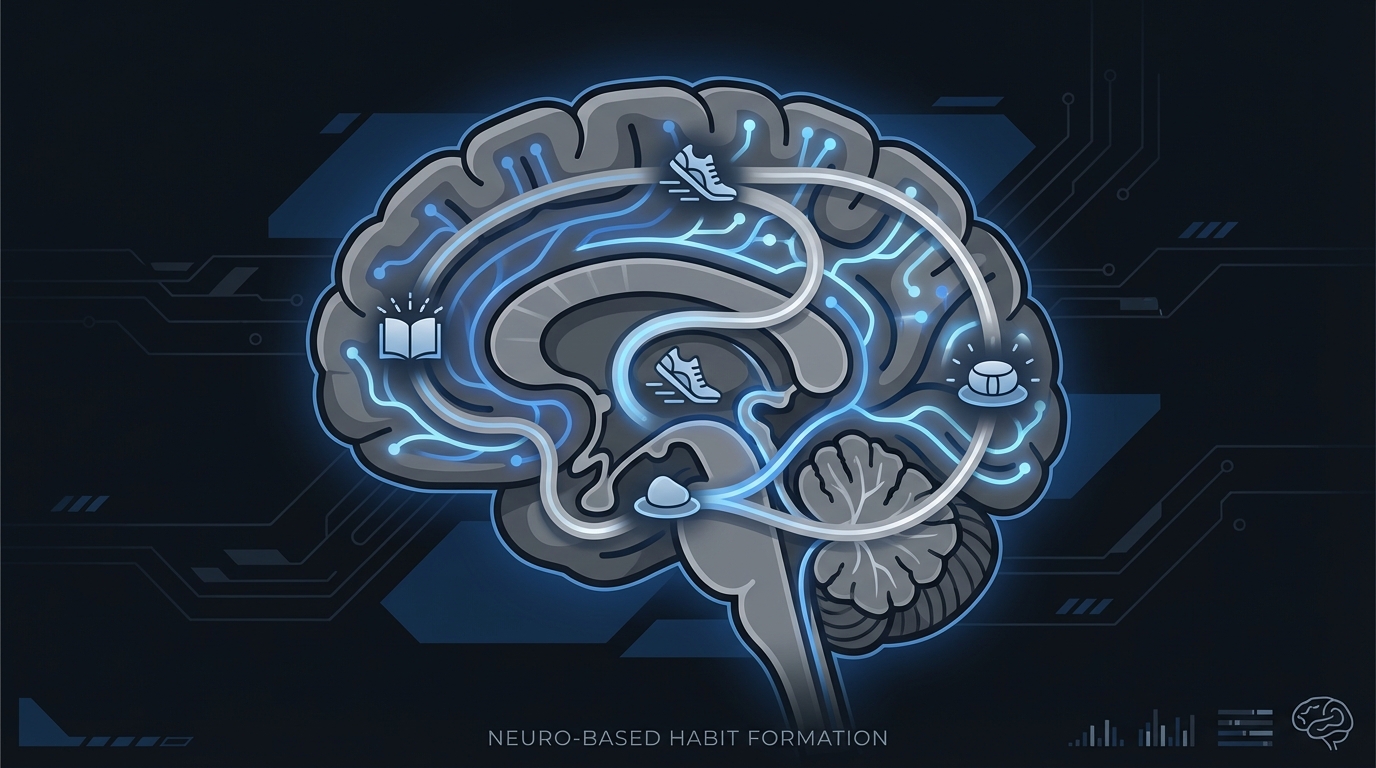
Most habit advice sounds like this: "Just do it for 21 days!" or "You need more discipline!" But neuroscience research reveals why this approach backfires. Your brain has two systems: the prefrontal cortex (your rational, planning brain) and the basal ganglia (your automatic, habit-forming brain).
When you rely purely on willpower, you're overworking your prefrontal cortex—the exact part of your brain that gets depleted by decision fatigue, stress, and daily life. That's why your best intentions crumble by 3 PM when you're mentally fried.
The smarter approach? Work with your brain's natural reward systems instead of against them. Let's dive into three science-backed strategies that make habit formation feel almost effortless.
Habit #1: The 2-Minute Dopamine Stack
Your brain craves dopamine—the neurotransmitter that signals "this feels good, do it again." But here's the hack: you don't need to wait for the long-term benefits of your habit to get that dopamine hit. You can engineer it immediately.
How it works:
- Pick your target habit (let's say reading)
- Stack it with something that already gives you a dopamine boost
- Keep the initial commitment to just 2 minutes
- Celebrate immediately after completing it
For example: "After I pour my morning coffee (existing trigger), I will read one page of a book (new habit), then I'll check one fun message or photo (immediate reward)."
This creates what researchers call a "dopamine sandwich"—your brain gets rewarded before, during, and after the habit, making it want to repeat the sequence. The 2-minute rule ensures success is almost guaranteed, which builds momentum without overwhelming your system.
Habit #2: The Micro-Win Documentation System
Your brain is wired to focus on what you haven't done rather than celebrating what you have accomplished. This negativity bias served our ancestors well (better to notice the one predator than ignore it), but it sabotages modern habit-building.
The solution? Create a simple system that makes your tiny wins visible and rewarding.
The process:
- Use a habit tracker (app, calendar, or simple checkmarks)
- Focus on consistency over perfection—mark completion even if you did the minimum
- Review your wins weekly, not daily
- Notice patterns: What days/times work best? What derails you?
Here's the neurological magic: each checkmark triggers a small dopamine release. String together enough of these micro-rewards, and your brain starts to crave the habit itself, not just the completion feeling.
Pro tip: Don't track everything at once. Pick one habit, nail it for a month, then add another. Your brain needs time to automate each behavior before layering on new challenges.
Habit #3: The Environmental Autopilot Design
Your environment is constantly sending signals to your brain about what to do next. Make those signals work for your neuro-based habits instead of against them.
Research from Duke University shows that 40% of our daily actions are habits, not conscious decisions. This means nearly half your day runs on autopilot. The question is: have you designed that autopilot intentionally?
Environmental design principles:
- Make good habits obvious: Place your running shoes by your bed, keep books on your coffee table
- Make bad habits invisible: Put your phone in another room while working, store junk food out of sight
- Reduce friction for desired behaviors: Pre-cut vegetables, lay out workout clothes the night before
- Add friction to unwanted behaviors: Log out of social media apps, use website blockers during focus time
The goal isn't to rely on motivation—it's to design your space so the right choice becomes the easy choice. When your environment supports your habits, willpower becomes nearly irrelevant.
Putting It All Together: Your Week-by-Week Implementation Guide
Week 1: Foundation Setting
Choose one habit and apply the 2-minute rule. Set up your environment for success. Start tracking with simple checkmarks. Focus only on showing up consistently.
Week 2: Momentum Building
Notice how much easier the habit feels. This is your brain's neural pathways strengthening. You can gradually increase duration if it feels natural, but don't force it.
Week 3-4: Automaticity
Your habit should start feeling automatic. This is when you can consider adding a second habit or increasing the scope of your current one. Trust the process—your brain is literally rewiring itself.
The Science Behind Why This Actually Works
Neuroplasticity research shows that consistent small actions create stronger neural pathways than sporadic intense efforts. When you repeat a behavior in the same context (same time, same place, same trigger), your brain builds what neuroscientists call "automaticity."
Think of it like walking through a field. The first time, you push through tall grass. But walk the same path daily, and eventually, you create a clear trail that's easy to follow. Your brain does the same thing with habits—repeated actions become mental highways.
The dopamine triggers and tiny wins aren't just feel-good psychology; they're brain chemistry in action. Each success, no matter how small, releases dopamine and strengthens the neural pathway associated with that behavior.
Common Pitfalls and How to Avoid Them
Even with neuro-based habits, you might hit roadblocks. Here's how to navigate them:
- The Perfection Trap: You miss a day and feel like you've failed. Remember—consistency beats perfection. One missed day doesn't erase your progress.
- The Expansion Temptation: Your habit feels easy, so you try to 10x it immediately. Resist this urge. Gradual increases work better than dramatic jumps.
- The Motivation Myth: You wait to "feel motivated" before starting. Motivation follows action, not the other way around. Start small, and motivation will catch up.
Your Next Step: From Knowing to Doing
You now have three science-backed strategies to build habits that stick without the willpower struggle. But knowledge without action is just interesting trivia.
What habit have you been trying to build but struggling to maintain? How could you apply the 2-minute rule to make it almost impossible to fail? Your brain is ready to rewire itself—you just need to give it the right conditions to thrive.
The shift from guilt to glide isn't about becoming a different person. It's about working with your brain's natural systems instead of fighting them. Start with one tiny, consistent action, and watch how your neuro-based habits transform not just your routines, but your entire relationship with personal growth.


