
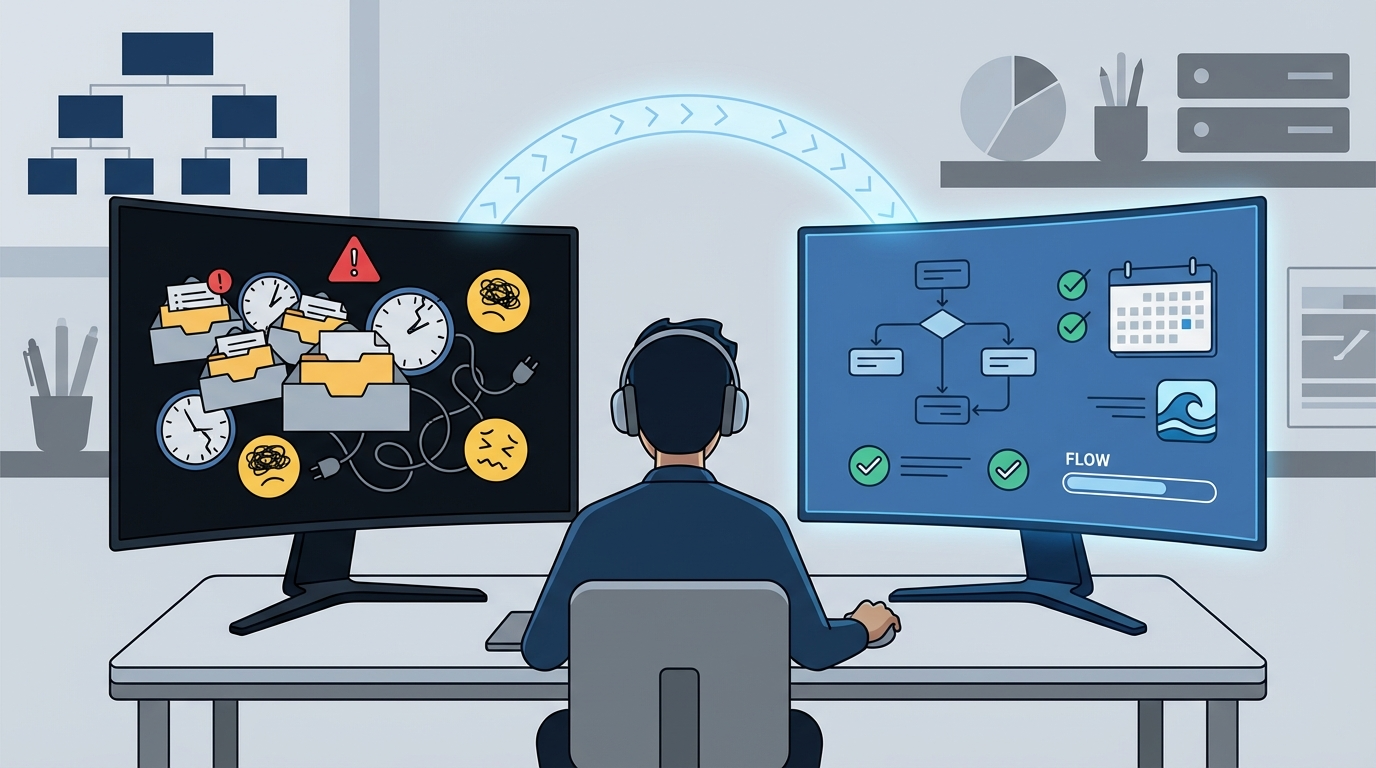
Burnout Paradox: Why Harder Hustle Kills Output + Fix
The Burnout Paradox: Why Harder Hustle Kills Output (and the Hybrid Fix)
Picture this: Sarah, a marketing director, decided to "power through" her overwhelming workload by adding two extra hours to her daily grind. Three weeks later, she was making more mistakes than a rookie intern and couldn't remember basic client names. Sound familiar?
Here's the kicker—burnout isn't just about feeling tired. It's your brain's sophisticated warning system telling you that harder isn't working anymore. Yet most high-achievers treat burnout like a badge of honor instead of the productivity killer it really is.
What if everything you've been taught about "grinding harder" is actually sabotaging your output? Let's unpack this paradox and discover a hybrid recovery protocol that restores peak performance without sacrificing ambition.
The Hidden Science Behind the Burnout Paradox
Your brain operates like a high-performance smartphone. When you constantly run demanding apps without letting the battery recharge, everything slows down—even simple tasks become laggy.
Research from Stanford's Human Performance Lab reveals that cognitive output drops by 40-60% during burnout phases, while error rates skyrocket. The cruel irony? The harder you push during burnout, the less you actually accomplish.
Here's what happens inside your neural circuitry:
- Prefrontal cortex fatigue impairs decision-making and creative thinking
- Stress hormones flood your system, creating a constant fight-or-flight state
- Working memory capacity shrinks, making complex tasks feel impossible
- Sleep quality deteriorates, further compromising cognitive recovery
The result? You're working twice as hard to produce half the quality. That's the burnout paradox in action.
Warning Signs Your Hustle Has Turned Toxic
Before diving into solutions, let's identify if you're caught in this productivity trap. These early warning signals often get dismissed as "just being busy":
Cognitive Red Flags
- Simple decisions feel overwhelming
- You're re-reading emails multiple times without absorbing content
- Creative solutions that used to come naturally now feel forced
- Procrastination on important tasks increases dramatically
Physical and Emotional Symptoms
- Persistent fatigue that sleep doesn't cure
- Increased irritability with colleagues or family
- Loss of motivation for projects you once found exciting
- Physical tension that won't release, even during downtime
Recognition is the first step toward recovery. Ignoring these signals and pushing harder only accelerates the productivity death spiral.
The Hybrid Recovery Protocol: Your Performance Restoration System
Traditional advice tells you to either "push through" or "take a vacation." Both miss the mark. The hybrid approach combines strategic recovery with maintained momentum—think of it as performance tuning rather than complete shutdown.
Phase 1: Immediate Cognitive Reset (Days 1-3)
Start with these rapid-relief techniques that don't require major schedule overhauls:
- Implement the 90-Minute Rule: Work in focused 90-minute blocks followed by 15-minute complete breaks. This aligns with your brain's natural ultradian rhythms.
- Practice Strategic No-ing: Identify three non-essential commitments and either delegate, postpone, or eliminate them entirely.
- Activate Parasympathetic Recovery: Spend 10 minutes daily doing controlled breathing exercises—4 counts in, 6 counts out.
Phase 2: Sustainable Energy Management (Week 1-2)
Now we rebuild your energy systems for long-term performance:
- Optimize Your Chronotype: Schedule demanding cognitive work during your natural peak hours (usually 10 AM - 12 PM for most people).
- Create Recovery Buffers: Build 20-minute transition periods between intense tasks to prevent cognitive spillover.
- Establish Digital Boundaries: Set specific "communication windows" instead of being constantly available—your brain needs uninterrupted processing time.
Phase 3: Performance Optimization (Week 3+)
The final phase focuses on sustainable high performance without the crash:
- Energy auditing: Track which activities energize versus drain you, then redesign your schedule accordingly
- Skill stacking: Combine related tasks to reduce cognitive switching costs
- Recovery tracking: Monitor sleep quality, stress levels, and creative output to catch early warning signs
Why Most Recovery Attempts Fail (And How to Avoid Them)
Here's where most ambitious people sabotage their own recovery efforts:
Mistake #1: All-or-Nothing Thinking
You don't need a month-long retreat. Small, consistent adjustments compound into dramatic improvements.
Mistake #2: Guilt About "Not Being Productive"
Recovery IS productive. A 20% reduction in hours often leads to 40% better output quality.
Mistake #3: Skipping the Systems Setup
Recovery without new systems is just temporary relief. Build protocols that prevent future burnout cycles.
Real-World Implementation: Making It Stick
Ready to implement this hybrid approach? Start with these actionable steps:
This Week: Choose one Phase 1 technique and practice it for seven days straight. Track your energy levels and cognitive clarity.
Next Week: Add one Phase 2 strategy while maintaining your Phase 1 practice. Notice which combinations work best for your lifestyle.
Week 3: Begin Phase 3 optimization while keeping successful elements from previous phases.
Remember: progress over perfection. A 70% implementation of this protocol beats 100% planning without action.
The ROI of Strategic Recovery
Here's what clients typically report after implementing the hybrid protocol:
- 25-40% improvement in creative problem-solving within two weeks
- Reduced project completion time despite working fewer hours
- Better decision quality and fewer costly mistakes
- Increased team collaboration and communication effectiveness
Most importantly? Sustainable high performance instead of boom-and-bust cycles that leave you constantly catching up.
The burnout paradox isn't about working less—it's about working smarter. When you align your effort with your natural energy cycles and build in strategic recovery, you don't just prevent burnout; you unlock performance levels that grinding alone could never achieve.
Ready to break free from the harder-is-better trap? Your future self—and your output—will thank you for making this shift today.


