
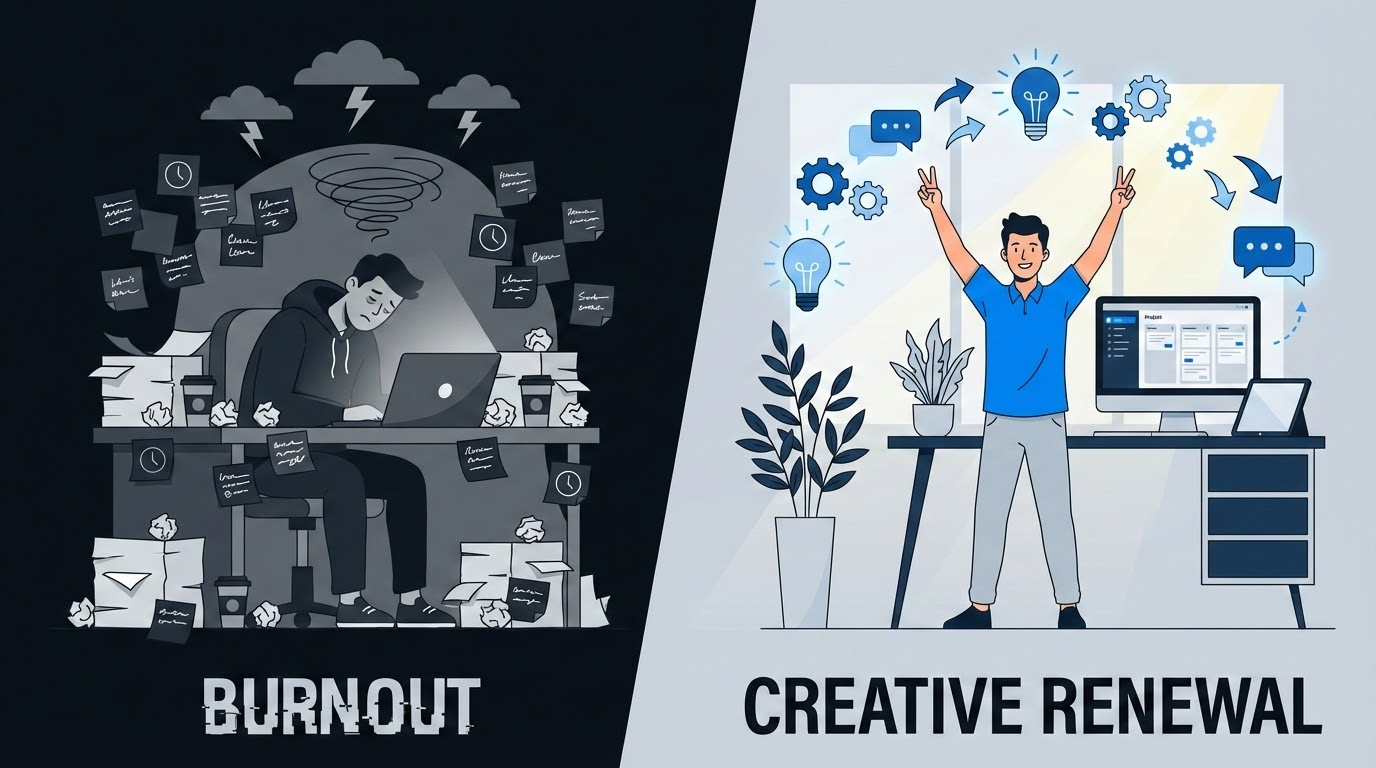
4-Day Burnout Recovery Plan Designers Love | Beat Exhaustion
The Burnout-to-Brilliance Sprint: 4-Day Recharge Plan Designers Swear By
Picture this: Sarah, a UX designer at a fast-growing startup, found herself staring at her screen at 2 AM for the third night in a row, her creative well completely dry. Sound familiar? Burnout isn't just tiredness—it's like trying to squeeze water from a stone when your mind once flowed like a river.
But here's the thing that'll surprise you: What if I told you that some of the most brilliant designers have cracked the code on turning exhaustion into explosive creativity in just four days?
The burnout-to-brilliance sprint isn't another wellness trend—it's a structured recharge system that's been quietly revolutionizing how creative professionals recover and reignite their passion. This isn't about a week-long vacation (who has time for that?). This is about strategic recovery that fits into your real life.
Why Traditional "Rest" Fails Creative Minds
Most advice about beating burnout sounds like this: "Just relax more." But here's what wellness gurus don't understand about creative work—our brains don't shut off like laptops. They're more like smartphones, constantly running background apps even when we're "resting."
The 4-day recharge plan works differently. Instead of fighting your creative brain, it redirects that energy through a systematic approach that actually amplifies your creative capacity rather than just temporarily masking exhaustion.
The Science Behind the 4-Day Recovery Window
Research from the Journal of Occupational Health Psychology shows that creative professionals need a minimum of 72-96 hours to fully reset their cognitive resources. This isn't arbitrary—it's the sweet spot where your brain can:
- Clear accumulated mental fatigue
- Restore dopamine pathways critical for motivation
- Rebuild the neural connections that spark innovation
- Process and integrate recent creative challenges
Think of it as defragmenting your mental hard drive, but way more strategic.
Day 1: The Great Digital Detox
Goal: Break the stimulation cycle that's keeping your mind in overdrive.
Start your sprint by creating what designers call "white space" for your brain. This doesn't mean sitting in silence (that's torture for most creatives). Instead:
- Set your phone to airplane mode from 6 PM to 10 AM
- Replace screen time with analog activities: sketching, reading physical books, cooking
- Take a 30-minute walk without podcasts or music—let your mind wander
- Journal for 10 minutes about what's been draining your energy
Pro tip: Many designers report that their best ideas come during this "boredom" phase. Your brain finally has space to make those connections it's been trying to form.
Day 2: Strategic Energy Audit
Goal: Identify what's been silently draining your creative batteries.
This is where the magic happens. You're not just resting—you're becoming a detective of your own energy patterns. Map out your energy thieves and energy boosters with brutal honesty:
- Energy Drains Inventory: List everything that makes you feel depleted (endless Slack notifications, perfectionist clients, comparison scrolling)
- Energy Boosters Audit: Identify what genuinely energizes you (collaborative brainstorming, learning new techniques, mentoring juniors)
- Boundary Planning: Design systems to minimize drains and maximize boosters in your regular workflow
One designer discovered that checking email first thing in the morning was sabotaging her entire day's creative flow. Simple awareness, game-changing results.
Day 3: Creative Cross-Training
Goal: Reignite your creative spark through novel experiences.
Here's where the brilliance part kicks in. Instead of avoiding creativity altogether, you're going to creative cross-train—engage your creative muscles in completely different ways:
- If you're a digital designer, try watercolor painting
- If you work solo, join a collaborative workshop
- If you focus on visuals, experiment with music or writing
- Take a photography walk in a neighborhood you've never explored
The goal isn't to become a master—it's to remind your brain that creativity is supposed to be playful, not pressure-filled.
Day 4: Integration and Systems Setup
Goal: Build sustainable practices that prevent future burnout.
This final day is about creating what I call "burnout insurance"—systems that keep you operating in your zone of genius rather than grinding toward exhaustion:
- Design Your Ideal Week: Block calendar time for deep work, collaboration, and recovery
- Create Micro-Recovery Rituals: 5-minute breathing exercises between meetings, 15-minute walks after challenging projects
- Set Up Early Warning Systems: Identify your personal burnout signals and create automatic responses
- Build Your Support Network: Connect with other designers who understand the creative struggle
The Unexpected Results Designers Are Reporting
What's fascinating about this approach is that designers aren't just returning to their previous level of creativity—they're often exceeding it. Here's what participants consistently report:
- Ideas flow more freely during brainstorming sessions
- Less second-guessing and perfectionism paralysis
- Improved client relationships due to clearer communication
- Renewed enthusiasm for challenging projects
One product designer described it as "remembering why I fell in love with design in the first place."
Making It Stick: Beyond the 4-Day Sprint
The real power of this system isn't just the initial reset—it's building the awareness and tools to prevent future creative crashes. Many designers now use modified versions monthly or whenever they feel that familiar creative fog rolling in.
Think of it as regular maintenance for your most important creative tool: your mind.
Your Creative Comeback Starts Now
Burnout doesn't have to be a permanent state or an inevitable part of creative work. With the right system, that exhaustion can become the catalyst for your most brilliant creative period yet.
The question isn't whether you can afford to take four days to reset—it's whether you can afford not to. How much longer will you let burnout dim your creative fire when brilliance is just one sprint away?


