
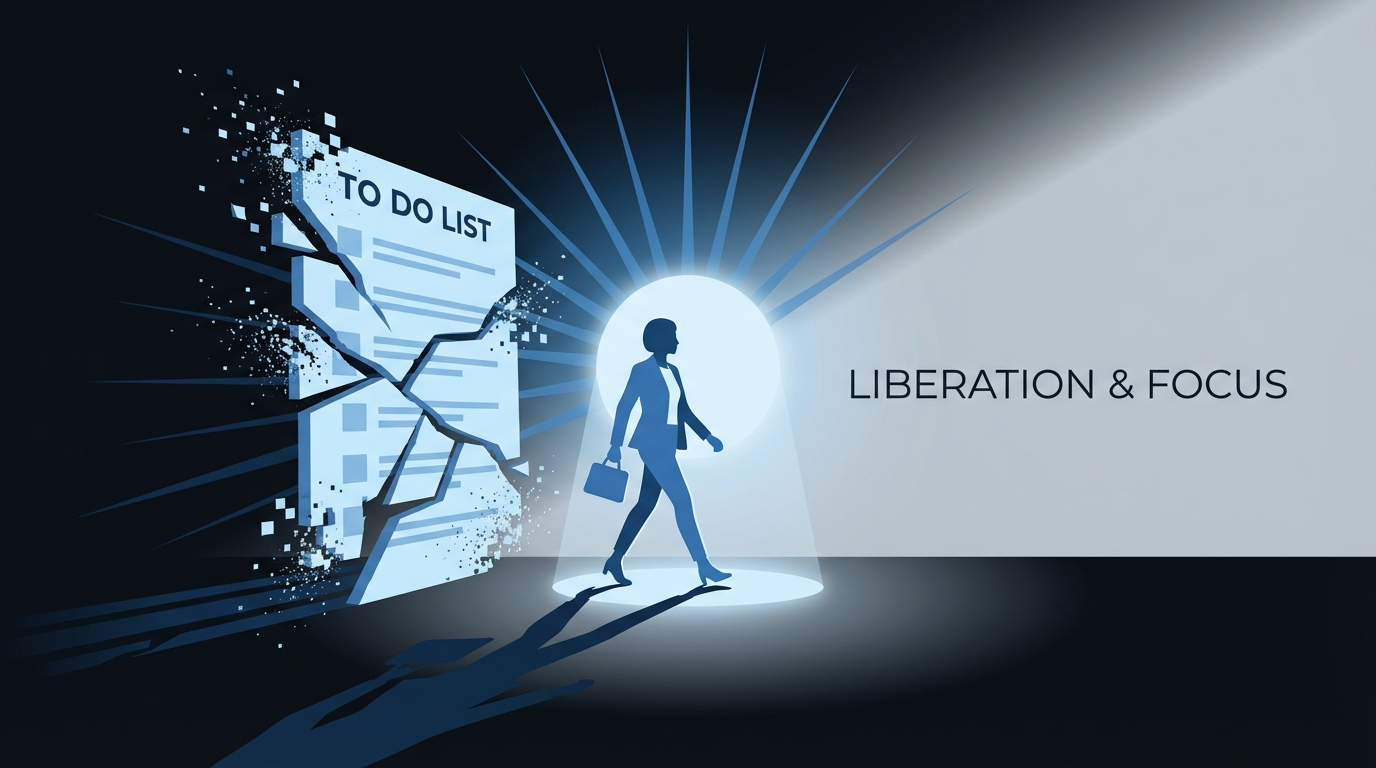
Quiet Quitting Your To-Do List: Reclaim 10 Weekly Hours
Quiet Quitting Your To-Do List: A Single Habit to Reclaim 10 Weekly Hours
Picture this: You're drowning in a sea of sticky notes, digital reminders, and that ever-growing to-do list that mocks you from your desk. Sound familiar? Here's the thing—your to-do list isn't helping you get more done. It's actually sabotaging your productivity and stealing precious hours from your week.
What if I told you there's a way to quiet quit that overwhelming list and reclaim up to 10 hours weekly? Not by doing more, but by doing less—strategically.
The Hidden Cost of To-Do List Addiction
Most productivity systems treat symptoms, not the disease. We add more apps, create more lists, and wonder why we're still spinning our wheels. The reality? Task switching costs us an average of 23 minutes per interruption, according to research from UC Irvine.
Here's what's really happening when you're constantly checking and updating your to-do list:
- Decision fatigue from choosing what to tackle next
- Cognitive overload from seeing everything at once
- Procrastination disguised as "planning"
- Stress from visual reminders of unfinished tasks
Think about it—how much mental energy do you spend just managing your tasks instead of actually completing them?
The Single Weekly Trigger Method
Here's where the magic happens. Instead of managing dozens of daily decisions, you're going to create one weekly trigger that automatically determines your priorities. This isn't about abandoning all structure—it's about building a system that works even when you're drowning in meeting overload.
Step 1: Choose Your North Star Metric
Every Sunday (or your preferred planning day), identify one measurable outcome that would make the biggest impact on your goals. Not three, not five—one. This becomes your weekly trigger.
Examples of powerful weekly triggers:
- "Complete the client presentation that's been stalled for two weeks"
- "Write 5,000 words of the quarterly report"
- "Have three meaningful conversations with team members"
- "Clear the project backlog to under 10 items"
Step 2: The 2-Hour Deep Work Block
Block out two hours (yes, two full hours) on your calendar for your weekly trigger. Treat this like a non-negotiable meeting with your most important client—yourself. During this time:
- Turn off all notifications
- Close email and messaging apps
- Work solely on your weekly trigger
- Ignore everything else, no matter how "urgent" it seems
This single block of compounding focus will accomplish more than scattered efforts throughout the week.
Step 3: The Everything Else Bucket
Create one simple document or note labeled "Everything Else." When tasks, ideas, or requests pop up during your week, dump them there without processing. Don't categorize, don't prioritize, just capture and forget.
This serves as a pressure valve for your brain—you're not ignoring these items, you're just deferring the decision about their importance.
Why This Works Under Meeting Overload
Traditional productivity advice falls apart when your calendar looks like Tetris. But the weekly trigger method is designed for chaos. Here's why:
Cognitive simplicity: You only have one priority to remember, not twenty. When someone asks what you're working on, you have a clear answer.
Meeting resilience: Even if meetings hijack 80% of your week, that protected 2-hour block moves the needle on what actually matters.
Energy alignment: By focusing your best energy on your biggest lever, you create momentum that carries through the rest of your tasks.
The Compounding Effect of Single-Focus Weeks
Here's where things get interesting. After four weeks of this approach, something remarkable happens—your brain starts optimizing automatically. You'll notice:
- Faster decision-making on smaller tasks
- Natural filtering of low-value requests
- Increased confidence in saying "no" to distractions
- Better estimation of what's actually achievable
One client reported: "I stopped checking my task list obsessively and started actually finishing important projects. It's like I quiet quit the productivity theater and joined the results club."
Practical Implementation Tips
Ready to try this? Here are some tactical guidelines to set yourself up for success:
Choosing Your Weekly Trigger
Pick something that's outcome-focused, not activity-based. "Spend 4 hours on marketing" is activity-based. "Complete the Q2 campaign strategy" is outcome-focused.
Protecting Your Deep Work Block
Schedule it during your peak energy hours—usually morning for most people. If you're constantly getting interrupted, consider:
- Working from a different location
- Setting an out-of-office message during the block
- Having a colleague field non-urgent requests
Handling Resistance
Your brain will resist this simplicity. It's been trained to believe that busy equals productive. When the urge to create more lists strikes, remind yourself: complexity is the enemy of execution.
What About True Emergencies?
Real emergencies are rare—most "urgent" tasks are just poor planning in disguise. That said, if something genuinely critical emerges, handle it and return to your weekly trigger. The system is flexible enough to bend without breaking.
Measuring Your Reclaimed Time
Track these metrics to see your improvement:
- Time spent on task management: Before vs. after implementing weekly triggers
- Project completion rate: How many important projects you actually finish
- Context switching frequency: Count how often you jump between different types of work
Most people discover they've been spending 8-12 hours weekly on productivity overhead—checking lists, switching between tasks, and decision-making fatigue. The weekly trigger method cuts this to under 2 hours.
Beyond the Individual: Team Implementation
This approach scales beautifully for teams. Have each team member share their weekly trigger during Monday standups. Suddenly, everyone knows what success looks like for the week, and you can align support and remove blockers more effectively.
The Long Game
After three months of weekly triggers, you'll have completed 12 significant outcomes that previously would have languished on various lists. That's the equivalent of a quarter's worth of meaningful progress—all from simplifying your approach rather than optimizing your tools.
Remember, productivity isn't about doing more things—it's about doing the right things consistently. By quiet quitting your to-do list and embracing the power of single-focus weeks, you're not just reclaiming time. You're reclaiming agency over your work and results.
The best part? This system gets stronger over time. As you build the habit of weekly triggers, your ability to identify and execute on high-impact work becomes almost automatic. You'll find yourself naturally gravitating toward activities that move the needle, and the constant buzz of task anxiety starts to fade.
Ready to give your to-do list its two weeks' notice? Pick your first weekly trigger, block those two hours, and watch what happens when you stop managing productivity and start creating it.


