
AI Meeting Management: How One Agency Saved 10 Hours Weekly
AI Meeting Management: How One Agency Saved 10 Hours Weekly
Picture this: It's 11:47 AM on a Tuesday, and Sarah, the creative director at Momentum Digital, is staring at her calendar like it's written in ancient hieroglyphics. Three overlapping meetings, two "quick syncs" that somehow stretched to 45 minutes each, and a client call that got moved four times this week alone. Sound familiar?
Meeting chaos isn't just annoying—it's a productivity vampire that drains energy, focus, and billable hours. But what if I told you there's a way to AI meeting management that could give you back 2 hours before lunch every single day?
Here's the story of how Momentum Digital, an 8-person creative agency, used artificial intelligence to transform their meeting madness into a streamlined system that saved them 10 collective hours weekly. More importantly, here's how you can implement the same approach starting tomorrow.
The Breaking Point: When Meetings Become the Enemy
Before their transformation, Momentum Digital was drowning in what their founder Jake called "productivity quicksand." The numbers were staggering:
- 37 meetings per week across the 8-person team
- Average of 23 minutes spent daily just scheduling meetings
- 4.6 hours weekly lost to meeting conflicts and reschedules
- Zero buffer time between back-to-back sessions
"We were meeting about meetings," Jake laughs now. "Our Monday planning session became a 90-minute discussion about when we could meet to plan the rest of the week. That's when I knew we needed a systematic intervention."
The AI Meeting Management Solution: A Three-Pillar Approach
Rather than implementing one massive overhaul, Momentum Digital took a strategic, systems-thinking approach to AI meeting management. They built their solution on three interconnected pillars:
Pillar 1: Intelligent Meeting Consolidation
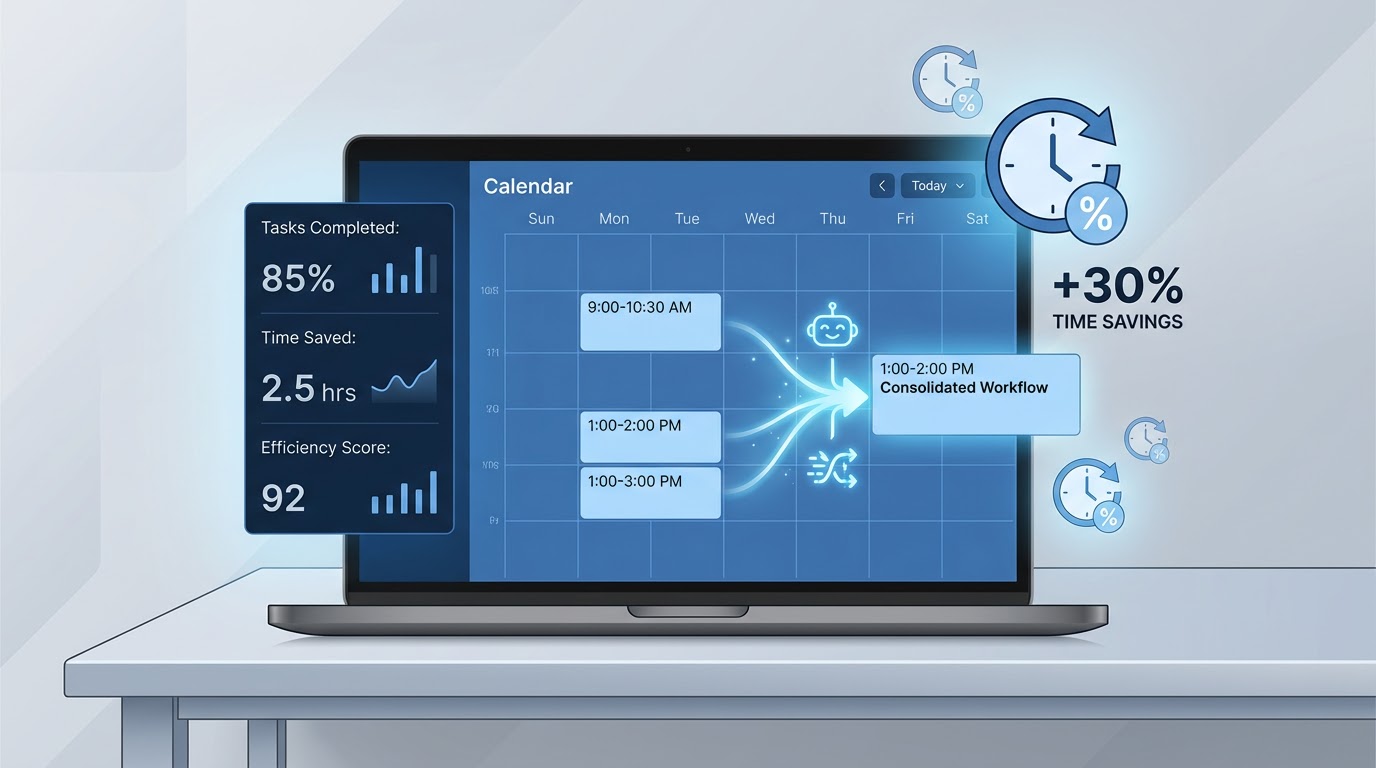
The team implemented an AI-powered scheduling system that automatically identifies and merges similar meetings. Here's how it works:
- Topic Analysis: The AI scans meeting titles, descriptions, and participant lists to identify overlap
- Smart Grouping: Related discussions get automatically clustered into single, focused sessions
- Agenda Optimization: The system creates structured agendas that address all consolidated topics efficiently
"Instead of three separate 30-minute brainstorming sessions for different projects, we now have one strategic 45-minute session that covers everything," explains Sarah. "The AI even suggests the optimal order for discussing each topic based on energy levels and decision complexity."
Pillar 2: Predictive Conflict Resolution
The second pillar focuses on preventing scheduling nightmares before they happen. The AI system analyzes patterns across the entire team to predict and prevent conflicts:
- Energy mapping: Identifies each team member's peak performance windows
- Workload balancing: Prevents meeting-heavy days that kill productivity
- Buffer time automation: Automatically builds in transition time between sessions
Pillar 3: Meeting Necessity Filtering
Perhaps the most powerful feature is the AI's ability to question whether a meeting should exist at all. The system evaluates:
- Could this be handled asynchronously?
- Are the right stakeholders involved?
- Is there a clear decision or outcome expected?
"About 30% of our proposed meetings get flagged as 'potentially unnecessary,'" notes Jake. "That alone saved us hours, but the real magic happens when the AI suggests alternative solutions—like shared documents for status updates or quick video messages for complex explanations."
The Implementation: How They Built Their Meeting-Merging System
Momentum Digital didn't buy an off-the-shelf solution. Instead, they created a custom workflow using readily available tools that any agency can replicate:
Step 1: Data Integration and Analysis
They connected their calendar system (Google Workspace) with an AI automation platform to create a central intelligence hub. The system pulls data from:
- Calendar events and recurring meetings
- Project management tools (Monday.com in their case)
- Communication platforms (Slack)
- Client relationship management systems
Step 2: Smart Pattern Recognition
The AI learns from historical meeting data to identify optimization opportunities. It recognizes patterns like:
- Meetings that consistently run over time
- Sessions where key stakeholders arrive late or leave early
- Topics that frequently get postponed or tabled
Step 3: Automated Optimization Suggestions
Every Sunday evening, the system generates a "weekly meeting optimization report" that includes:
- Consolidation opportunities: "These 4 client check-ins could become 1 focused session"
- Timing adjustments: "Moving the creative review to Tuesday at 10 AM increases team energy by 23%"
- Format recommendations: "This status update works better as a 5-minute video walkthrough"
The Results: Numbers Don't Lie
After 8 weeks of implementation, Momentum Digital's AI meeting management system delivered measurable results:
- 43% reduction in total weekly meeting time
- 2.3 hours daily of reclaimed focused work time per team member
- 67% decrease in scheduling-related stress (measured via weekly team surveys)
- $12,000 additional monthly revenue from increased billable hour capacity
"The most surprising benefit wasn't the time savings," reflects Sarah. "It was the mental clarity. When you're not constantly context-switching between fragmented discussions, you can actually think strategically about client challenges."
Your Action Plan: Implementing AI Meeting Management This Week
Ready to reclaim your mornings? Here's your step-by-step implementation roadmap:
Week 1: Assessment and Setup
- Audit your current meeting landscape (use a simple spreadsheet to track all meetings for one week)
- Identify recurring meetings that could be consolidated
- Choose your AI automation platform (Zapier, Make.com, or n8n work well)
Week 2: Integration and Training
- Connect your calendar and project management tools to the AI system
- Set up basic automation rules for meeting analysis
- Train your team on the new workflow
Week 3-4: Optimization and Refinement
- Review AI suggestions and implement the most impactful changes
- Fine-tune pattern recognition based on your team's specific needs
- Measure results and adjust parameters
Common Pitfalls and How to Avoid Them
Based on Momentum Digital's experience, watch out for these implementation challenges:
- Over-automation: Don't eliminate all human judgment—some meetings need the personal touch
- Resistance to change: Start with willing team members and let results convince skeptics
- Perfectionism paralysis: Launch with basic functionality and improve iteratively
Beyond Time Savings: The Hidden Benefits
While the quantifiable results are impressive, Momentum Digital discovered several unexpected advantages of their AI meeting management approach:
- Improved client relationships: More focused meetings led to better outcomes and higher satisfaction
- Enhanced creativity: Protected deep work time resulted in more innovative solutions
- Reduced burnout: Less fragmented schedules meant lower stress and higher job satisfaction
"Our retention rate—both for team members and clients—improved significantly," notes Jake. "When you're not constantly rushing between meetings, you can be more present and thoughtful in every interaction."
The Future of Meetings: What's Next?
As AI technology continues evolving, Momentum Digital is already experimenting with advanced features like real-time meeting effectiveness scoring and automated action item tracking. The goal? Making every meeting count, every single time.
How could saving 2 hours before lunch transform your agency's performance? What client challenges could you solve with that additional focused time? The technology exists today—the question is whether you're ready to implement it.
Remember: AI isn't about replacing human connection; it's about amplifying human potential. By eliminating meeting chaos, you're not just saving time—you're creating space for the strategic thinking and creative problem-solving that truly drives business growth.


